Engineering the Future: Braden on Speed, Compliance, and Powering AI Infrastructure
Bob McGinty, Director of Marketing and Sales at the Braden Group brings over 35 years of experience in power generation, pioneering SCR advancements and driving innovative, efficient solutions on the exhaust side of gas turbines. In this exclusive interview, he shares how Braden is leveraging gas turbine technology to meet the surging power demands of the global data center boom and shape the future of cleaner, smarter energy.
Q: AI data centers are growing at an unprecedented rate. From your perspective, what are the biggest energy challenges this creates?
A: I think, where we’re at today, what we’re seeing is a real concern around the availability of turbines for these applications – and that’s creating a shortfall on the turbine supply side.
Now, a lot of that is what I’d call implied demand, it’s not always a reality until purchase orders are actually issued, but everyone has to plan ahead. So, companies like ours and our vendors downstream are constantly forecasting, and that can create a perceived backlog even when there isn’t one. It slows the process down and makes it harder to keep data current for quoting and design work.
On the infrastructure side, we’re seeing a lot of public resistance to new transmission and distribution projects that would supply these big data facilities. People don’t always want to pay for that infrastructure, so many of these data centers are being built as standalone, “inside-the-fence” power plants – they generate their own energy. That speeds things up but puts a lot of pressure on local natural gas and water resources.
Because, you know, if you’re in an area without the infrastructure – no transmission lines or transformers – you’ve got to build that capability yourself. So, these sites are often positioned along gas pipelines in less populated areas, just to have access to the supply they need.
And everything is driven by speed to market. We’re quoting gigawatts of SCR systems at any given time – multiple 1,000-megawatt projects happening simultaneously across several states. It’s massive. These facilities run continuously; they’re not just peaking units anymore. What used to be short-run turbines are now baseload machines operating 24/7.
All of that means more complexity – from supply chains to permitting and emissions. And when you add in water limitations for NOx control, you’re talking about much higher reduction rates, sometimes double reactors and twice the catalyst. So yeah, it’s a big balancing act between speed, sustainability, and supply.
Q: You touched on reliability and efficiency there, but can we talk a bit more specifically about Braden’s drive technology – what key innovations are most relevant to supporting data centers right now?
A: Yeah, sure. I think our drive technology is probably one of the biggest game-changers for the data center market right now. It’s really the result of continuous evolution – combining emissions control, simplicity, and reliability, all while keeping speed to market front of mind.
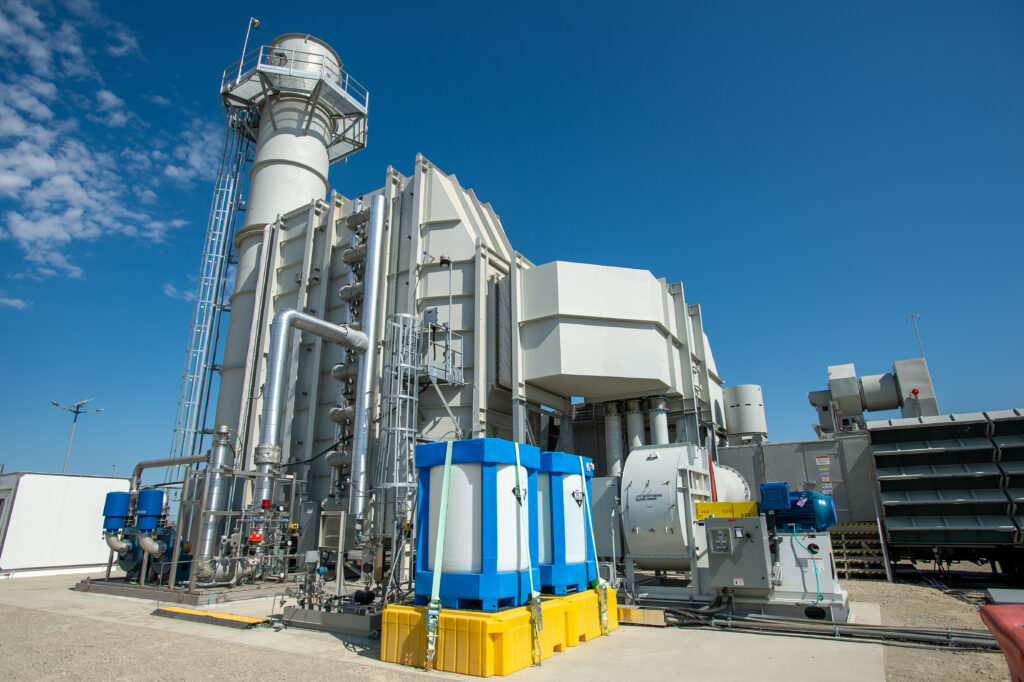
The biggest thing is what we call early compliance. Typically, a gas turbine takes 20 to 30 minutes to come into emissions compliance after start-up. With our drive technology, we can do that in as little as five minutes. And that’s a major shift because the start-up period is where most of your total emissions occur. The sooner you’re compliant, the less impact you have over the course of a year – and that makes it a lot easier from a permitting standpoint.
Our systems are also more compact, cost-effective, and operate efficiently across a broader range. When you combine that with our bolted modular design, it really changes the installation side of things. Instead of spending a month welding and assembling on-site, you can bolt these modules together in about a week. We always say, what takes a day in the shop takes five in the field – so the more we can do under controlled conditions, the better. It’s safer, faster, and a lot more predictable.
Q: That modular approach sounds like a huge step forward. What other developments have you made with that speed-to-market mindset?
A: So, what Braden’s been able to do, you know, through the evolution of our technologies, is introduce plug-and-play capability.
We’ve built direct injection technology into our SCR systems – that reduces the amount of equipment needed to hit compliance targets. And then we’ve added plug-and-play components that minimize field electrical and mechanical work. So instead of spending days or weeks wiring and fabricating on-site, a lot of that work is already built into the modules.
It’s a big difference. Especially when you look at how critical time is in data center development – every day saved matters. It’s all part of that same philosophy: simplify, standardize, and deliver faster without compromising performance, safely.
Q: Hydrogen is becoming a bigger part of the energy conversation – how is Braden preparing turbines to work alongside renewables and hydrogen production?
A: Yeah, we’re designing systems now that can handle hydrogen co-firing, so, a mix of natural gas and hydrogen, without making major changes to turbine operation. Most of our current designs can manage around 25% hydrogen co-firing, and we’re leaving space in those systems to scale higher in the future.
If a project wants to go above that threshold, we plan for extra catalyst layers and more ammonia injection grids, so the system can maintain performance and emissions compliance. Now, drive technology and hydrogen co-firing don’t always run together unless it’s at that lower levels, but we’re already designing for those conditions.
It’s all about flexibility – future-proofing our systems so operators can evolve as hydrogen becomes a bigger part of the energy mix. That’s where we see a lot of long-term opportunity.
Q: If you could change one perception about gas turbines in the AI world, what would it be?
A: Honestly, I’d change the perception around how long it takes for turbines to reach compliance. Most environmental evaluations still assume 20 or 30 minutes for a unit to stabilize and for the SCR system to kick in.
But our drive technology has completely changed that. We can start the turbine with the SCR system already operating – we don’t have to wait for it to heat up and it enables us to release interlocks earlier to inject ammonia. That means we’re achieving compliance in a fraction of the time, and that’s huge when you’re talking about total emissions over a year.
Every environmental consultant I talk to still bases their calculations on that old 20- to 30-minute model. But the reality is, technology has moved on. Drive technology is already cutting that by two-thirds or more – and that’s something the industry can really benefit from recognizing.
Q: And finally, looking ahead – where do you see all of this going in the next few years?
A: I think we’re just at the start of it. AI is changing the landscape faster than anyone expected, and it’s forcing everyone in energy to think differently.
At Braden, we’re focused on that intersection of speed, compliance, and innovation – things like early compliance, modular construction, plug-and-play systems, hydrogen readiness. All of it is about building smarter, faster, more flexible energy emission compliant solutions.
Because, you know, these aren’t just one-off projects anymore. They’re the foundation of the digital economy. And being part of that, helping create the energy backbone for the AI world, that’s something we’re really proud of.